
Cedar timbers bring warmth, natural decay resistance, and striking visual presence to pergolas, pavilions, and covered outdoor living spaces. Grade selection shapes how each beam looks at installation and how it performs after years of weather exposure. You get better long-term results when you match the grade to the structure, the view, and your budget.
Western Red Cedar grading rules separate timbers by appearance, strength, and the natural characteristics each piece contains. Large beams also bring a separate concern, since seasoning checks and splits appear as the wood dries. Here, you will learn how the main grades compare and which alternative options reduce common timber problems.
What Grade of Cedar Timbers Works Best for Exposed Outdoor Structures?
For exposed outdoor structures, Clear grades of Cedar timbers deliver the cleanest appearance with the fewest natural characteristics. Appearance and No. 2 and Better grades suit rustic pergolas and arbors where knots add visual character. For large beams, you gain added stability with Woodtone Absolute Timbers or Free of Heart Center (FOHC) Douglas Fir.
How Cedar Timbers Are Graded for Appearance and Strength
Cedar timbers follow grading rules that judge each piece by its visible characteristics, structural capacity, or both. Appearance grades focus on knots, pitch, and surface quality, while structural grades assign strength values for engineered loads. Understanding both systems helps you specify the right material before your project reaches the framing stage.
At the top of the appearance scale, Clear grades contain few knots or natural blemishes. According to Real Cedar, C and Better Clear suits premium landscape structures and exposed heavy timber posts and beams. D Clear, by contrast, allows larger and more frequent natural characteristics that suit most outdoor structures.
Knotty grades, meanwhile, present a rustic look and typically ship green, meaning the wood still holds its natural moisture. Clear grades also ship green in most cases, so you should plan for drying movement after installation.
Structural grades suit beams that carry roof loads, long spans, or other engineered applications. In contrast, Standard grade timbers carry no assigned structural values and serve general construction needs. Our Western Red Cedar specialists can walk you through each grade before you place an order.
Why Large Beams Check, Split, and Twist Outdoors
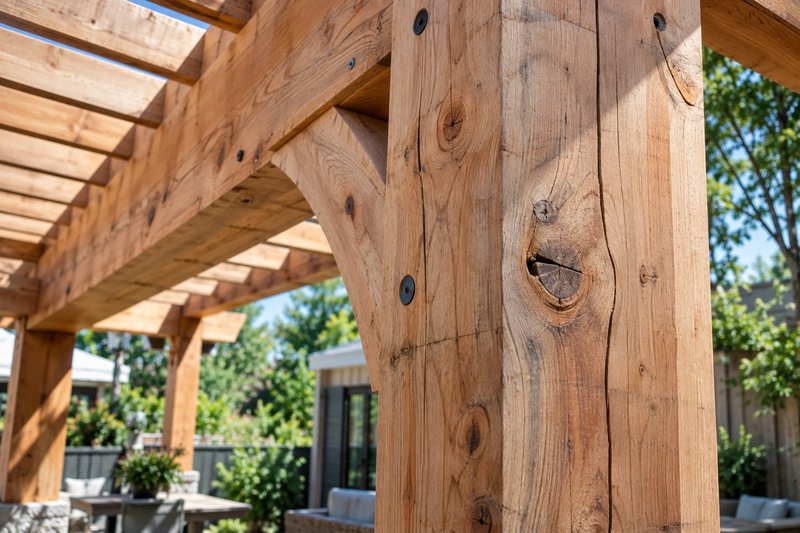
Most large solid-sawn Cedar timbers develop seasoning checks as moisture leaves the wood after milling. The outer layers dry and shrink faster than the core, and the resulting tension opens cracks along the grain. According to Northern Timbercrafters, a timber qualifies as dry once its moisture content falls to 19 percent or less.
Boxed-heart timbers contain the pith, or center ring, of the log within the finished beam. As a result, the wood shrinks around that center point and produces deeper checks that run toward the heart. Boxed-heart beams also twist more as they dry, which loosens fasteners and shifts joinery.
For demanding projects, FOHC Douglas Fir beams leave out the pith, so they crack and split less than boxed-heart Cedar. Similarly, Woodtone engineers its Absolute Timbers to reduce the splitting and cracking common in large 8×8 Cedar beams. Both options give you dependable beams for pergolas, pavilions, and decorative timber framing that stays visible.
Checks in solid-sawn timbers rarely affect structural performance, yet they change how exposed beams look over time. Consequently, you should weigh appearance goals alongside budget when you choose between solid-sawn Cedar and more stable alternatives.
Matching Cedar Timbers to Your Outdoor Project
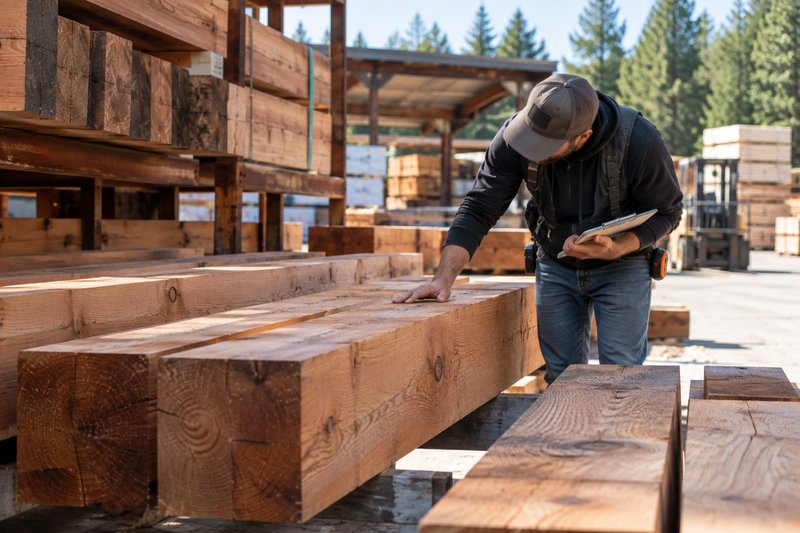
Your structure type, viewing distance, and exposure level should guide which grade of Cedar timbers you purchase. A shaded arbor viewed from the yard tolerates more knots than a covered patio beam above dining space. Use the following guidelines to narrow your options before requesting a quote from our team.
- Clear grades: Choose these for entry porticos, covered patios, and beams viewed up close every day.
- Appearance and D Clear grades: Select these for pergolas, trellises, and arbors where natural knots suit the design.
- Structural grades: Specify these for load-bearing posts and beams that require engineered strength values.
- Beams larger than 8×12: Consider FOHC Douglas Fir or Woodtone Absolute Timbers for improved dimensional stability.
Additionally, surfaced timbers give a refined look, while rough-sawn faces suit rustic and ranch-style homes. Our Hillsboro remanufacturing plant can surface timbers and cut corbels, rafter tails, and brackets on request.
Beyond the frame, you can pair timber structures with Trex, AZEK, or TimberTech composite and PVC decking underfoot. Low-maintenance boards reduce upkeep around the posts, where moisture and foot traffic concentrate. Together, the right timber grade and decking material create an outdoor space that ages with fewer surprises.
Find the Right Timber Grade for Your Next Build
Choosing Cedar timbers starts with understanding how appearance grades, structural grades, and heart center placement affect results. Clear grades suit close viewing, while knotty and D Clear grades bring rustic character to open structures. For oversized beams, Woodtone Absolute Timbers and FOHC Douglas Fir reduce the checking that concerns many builders.
Our specialists work with homebuilders, architects, contractors, and homeowners on timber selection every business day. Bring your drawings or span requirements, and we will help you match each beam to its job. Contact our Dallas team today to plan timbers that look right and hold steady for years.