
Composite decking has changed how homeowners think about outdoor spaces, especially when it comes to finish quality. With composite decking, you get a clean, seamless surface that looks premium and lasts for decades without visible screws or nails. Hidden fastener systems make that possible, and most modern composite boards are engineered around them from the start.
Traditional face-screwing works, but it leaves rows of dots across an otherwise perfect deck surface. Hidden fasteners tuck out of sight between boards, delivering the smooth aesthetic that homeowners now expect from a premium install. Understanding your options helps you plan a build that balances cost, appearance, and long-term performance.
What Are Hidden Fastener Systems for Composite Decking?
Hidden fastener systems for composite decking use clips, biscuits, or grooves to secure boards from the sides rather than the top. The hardware sits between the boards, eliminating visible screws and creating a clean surface across the entire deck. You get a sleek finish, better drainage between boards, and a fastening method engineered for how composites expand and contract.
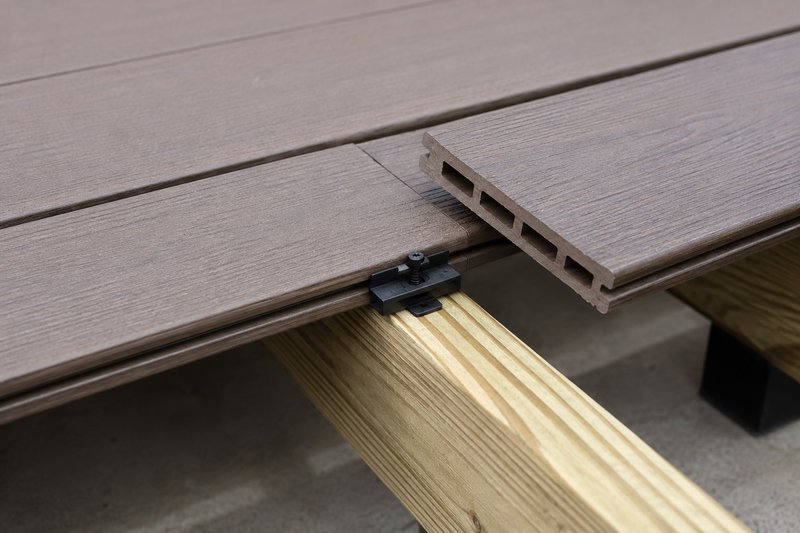
How Hidden Fasteners Work With Composite Decking
Composite boards come with grooved edges cut into the sides that accept small clips during installation. The clips screw down into the joist and hook into the groove, locking each board in place from below. Composite decking works especially well with this method because the material holds the groove better than most softwoods.
Most systems maintain a small automatic gap between boards, which allows for drainage and thermal movement. The clip design also lets boards expand and contract with temperature changes without splitting or buckling underfoot. As a result, you avoid the fastener pop and cupping issues that plague top-screwed decks over time.
Most composite manufacturers include installation instructions specific to hidden fastener systems in their product documentation. See our post on composite wood decking for more on how modern boards are built. Meanwhile, older face-screwed installations remain common on budget projects that prioritize speed over surface aesthetics.
Popular Hidden Fastener Systems for Composite Decking
Several fastener systems dominate the composite decking market, each with distinct advantages for different project types. Instead, you choose based on the board brand, project size, budget, and how much speed matters on install day. On top of that, a quick overview of the main options helps you narrow down the right approach before ordering materials.
The most common hidden fastener systems on the market today include the following:
- Grooved edge clips like those from Trex or TimberTech, which lock into pre-milled channels on the board sides
- Biscuit-style connectors that fit into slots cut with a special tool for boards without factory grooves
- Cortex plug systems, which use a color-matched wood plug to conceal top-driven screws on solid boards
- CAMO edge-driven fasteners, which install through the side of the board at an angle from above
- Deckwise Ipe Clip systems, adapted for both hardwood and composite decks with pre-grooved edges
Grooved clip systems remain the most popular because most premium composite boards ship with factory grooves ready to accept them. As a result, your board choice often dictates the fastener system rather than the other way around. You can browse our full decking product lineup.
Benefits of Choosing a Hidden Fastener System
The visual payoff is the first thing most homeowners notice when they walk onto a hidden-fastener deck. A clean, uninterrupted surface adds a premium feel that face-screwed decks cannot match on close inspection. Also, composite decking installed with hidden fasteners tends to hold up better over the long term.
Board replacement becomes far simpler when clips hold each plank rather than screws driven through the face. You unclip a damaged board, slide in a new one, and the surrounding surface stays untouched. Overall, the system pays back in repair simplicity as much as in daily appearance across the years.
According to the North American Deck and Railing Association, hidden fasteners now dominate high-end residential and commercial deck projects. The trend reflects buyer preference for clean lines and the growing quality of composite boards on the market. In addition, resale value benefits when prospective buyers see a modern, screw-free surface during a home tour.
Installation Tips for Hidden Fasteners on Composite Decking

A hidden fastener install rewards careful prep work more than any other decking method available today. You want joists dead-level, correctly spaced, and stable before the first board ever touches the framing. Composite decking with hidden clips demands exact joist spacing, since gaps affect how clips seat properly.
Follow these tips for a clean, long-lasting hidden fastener install on your next project:
- Follow the manufacturer's spacing chart to the letter, especially on stair treads and sun-facing areas
- Use stainless steel screws with your clips to prevent corrosion streaks around the fastener points
- Pre-drill pilot holes near board ends to prevent hairline cracks in colder weather
- Set the first board carefully, since every following row references its edge for straightness
- Snap a chalk line along the leading edge before locking clips down to verify alignment
- Keep clips snug but not overtightened, since too much torque can crack the groove wall
As a result, a crooked starter row shows up across the whole surface as boards drift from the reference line. See our guide on the best woods for decking boards for outdoor material comparisons.
Ready to Plan Your Composite Deck Build?
Hidden fastener systems turn a good composite deck into a premium outdoor space that holds up for decades. You get the clean surface, easier repairs, and long-term durability that today's homeowners actually want. The right combination of board brand and fastener choice makes a lasting difference to how the finished deck feels.
Whether you build in Dallas or somewhere farther out, our team can help you spec the right materials. We at Lee Roy Jordan Lumber work with builders on hidden fastener projects across the region every week. Get in touch with our Dallas team today to talk through hidden fastener options for your composite deck.